Maturation Before being filled into a variety of casks for maturation, the malt or grain ‘new make spirit’ is normally diluted with water to a strength somewhere between 60% and 70% abv. The quality of the casks is important because the new spirit will gain character and colour from the wood in which it matures. Most casks will previously have been used to mature other alcoholic beverages: some, for example, will have contained Sherry, and some will have contained American Bourbon Whiskey. Casks must be empty of their previous contents prior to being filled with Scotch Whisky or with spirit destined to become Scotch Whisky. The type of cask used for maturation will have been determined by the Chief Blender who is seeking a particular character for the final whisky. Maturation affects the spirit in three different ways; it removes some of the harsher attributes of the spirit; it adds some additional attributes from the wood; and it changes the chemical composition of the spirit. During maturation the distillate gradually takes on colour and becomes more mellow and smooth. 11 29 August 2013 Only after the minimum three years’ maturation does the new spirit became Scotch Whisky. In practice, many Scotch Whiskies are matured for much longer – from five to twelve, or eighteen years and sometimes longer. During this process the air penetrates through the porous oak of the casks and contributes to the character of the whisky. A proportion of the spirit (on average 2%) in each cask evaporates each year. Some companies choose to “finish” their Scotch Whiskies, particularly their Single Malt Scotch Whiskies, to provide additional complexity to the spirit. This is carried out by further maturation in a different cask. An example of ‘finishing’ is where a Single Malt Scotch Whisky, which has been matured for 12 years in barrels previously used for maturing Bourbon Whiskey, would acquire a different character if “finished” for an additional period of time in a cask which has previously held Sherry or Port wines. The decision as to whether to “finish” a Scotch Whisky or not depends on the character of the spirit the company’s blender wants to achieve
_______________________________________ "O să intru în păcat,/Sfinte Doamne, ţine-mă! Pentru vin nu am ficat,/Pentru apă... inimă! "PĂSTOREL
Ma bucur ca esti pe aici. Eu parca in ultimul timp nu prea mai am deloc timp liber... Nici macar cazanul nu l-am terminat. Sper sa revin in curand cu poze cu el gata facut si sa ma apuc din nou de plamadiri si distilari. Chiar mi-e dor...!
_______________________________________ Vodca băută cu măsură e bună în orice cantităţi.
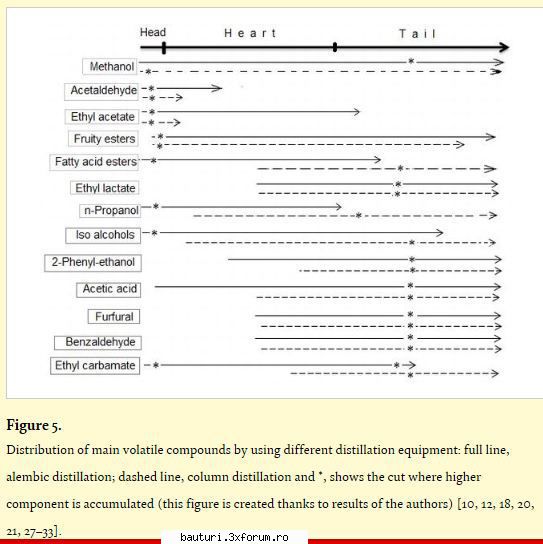
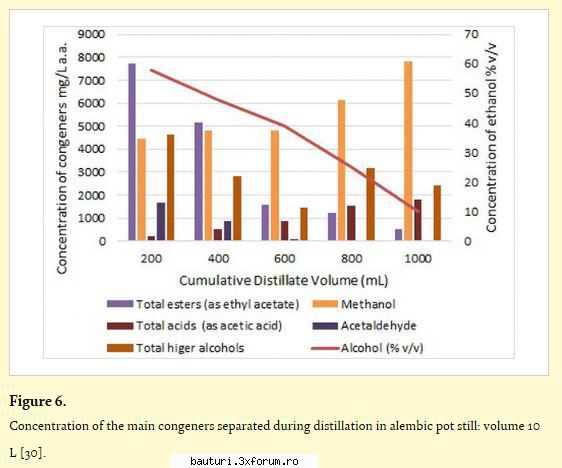
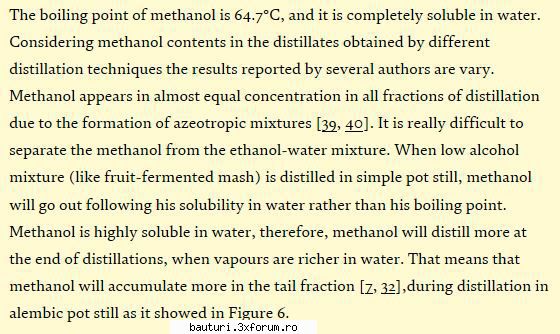
p.s. daca ne uitam pe prima pagina ... la STRIPPING RUN ... vedem ca diferntele de volum intre inima=alcool etilic si alti compusi sunt majore 30x ... oricum o solutie 3 component poate sa se comporte diferit de una bi component ... si noi avem o solutie multi component ... ... acum ramane sa vedem care e TENDINTZA DOMINANTA ... ... de remarcata ca pornim de la solutii apoase ... si obtinem solutii alcoolice la inceput , adica frunte si cap si inima-prima parte ... si apoi avem solutii apoase ca rezultat , adica inima sub 50% si cozile ...
CARTI_Documentatii – poza de Caberlot, in Rubrica selectii · 53.7KB
_______________________________________ "O să intru în păcat,/Sfinte Doamne, ţine-mă! Pentru vin nu am ficat,/Pentru apă... inimă! "PĂSTOREL